Sustainable Blooms: Eco-Friendly Floral Products You'll Adore
SUMMARY:
- Florists are embracing sustainability by adopting eco-friendly practices that balance artistry with environmental responsibility.
- Biodegradable containers and recycled vessels are replacing plastic, saving over a million kilos of waste annually.
- Plastic waste reduction is driven by tools like bamboo cardholders and DIY floral grids that eliminate single-use materials.
- Sustainable installations and tools such as reusable vases and eco floral mechanics enable large-scale designs without floral foam.
- Sustainability is a business advantage, with younger consumers preferring eco-conscious brands, boosting loyalty and long-term growth.
As florists, we work closely with nature — and now more than ever, we’re finding ways to protect it too. This guide shares practical, sustainable solutions to help reduce waste and keep your floral business eco-friendly and future-focused.
1. Caring for Nature: Florists Embrace Sustainability
Those in the floral industry have a unique connection to nature. Florists dedicate themselves to a craft that demands physical labour, creative talent, and a deep appreciation for Earth’s bounty. Flowers symbolise life and beauty, making it natural for florists to care about sustainability.
Yet, until recently, eco-friendly options for florists were limited. Challenges like sourcing locally grown flowers in winter or finding sustainable wrapping materials have persisted. However, innovations are changing the landscape. Understanding the difference between “eco-friendly” (reducing waste, recycling, biodegradability) and “sustainable” (avoiding resource depletion and regenerating resources) helps florists navigate these new options.
With practicality in mind, modern eco-friendly and sustainable products are designed to help florists reduce their environmental impact without sacrificing artistry or profitability.

2. Eco-Friendly Floral Containers: A Greener Future
Innovative companies like Koch & Co® are revolutionising the floral industry with sustainable container solutions. Products like containers made from biodegradable PLA derived from natural sugars are paving the way. These pots mimic plastic but decompose into organic matter, releasing nutrients that help plants thrive.
In 2024 alone, these containers have saved over 1 million kilos of plastic from entering landfills, with plans to dramatically increase this volume yearly. Recycled terra-cotta and 100% recycled plastic containers are other breakthroughs, helping florists minimise waste while offering aesthetically pleasing designs.
Reusing and repurposing vessels supports the planet and provides compelling stories for florists to share with their eco-conscious customers.
3. Reducing Plastic Waste: Biodegradable Containers and More
Plastic waste is a significant challenge in the floral industry. One subtle but impactful innovation is biodegradable bamboo containers, which replace traditional plastic ones. These containers decompose naturally, leaving no harmful residue. Over a year, a single florist uses hundreds of plastic containers, making this small change significant when multiplied across thousands of shops.
Additionally, tools like DIY floral grids eliminate the need for plastic grid tape, reducing single-use waste. These grids support arrangements and make water changes easier for customers, enhancing both sustainability and practicality.
4. Sustainable Floral Installations Made Easy
Large-scale floral installations, like arches and suspended designs, have historically been challenging to make sustainable. Innovations like reusable vases attached with zip ties to a wedding structure or backdrop provide a water source for floating designs without floral foam.
Designers like Holly Heider Chapple have introduced Installation Mechanics—modular containers that hold water and attach to any surface, supporting complex designs while minimising waste. These advancements let florists create stunning arrangements without compromising the planet.
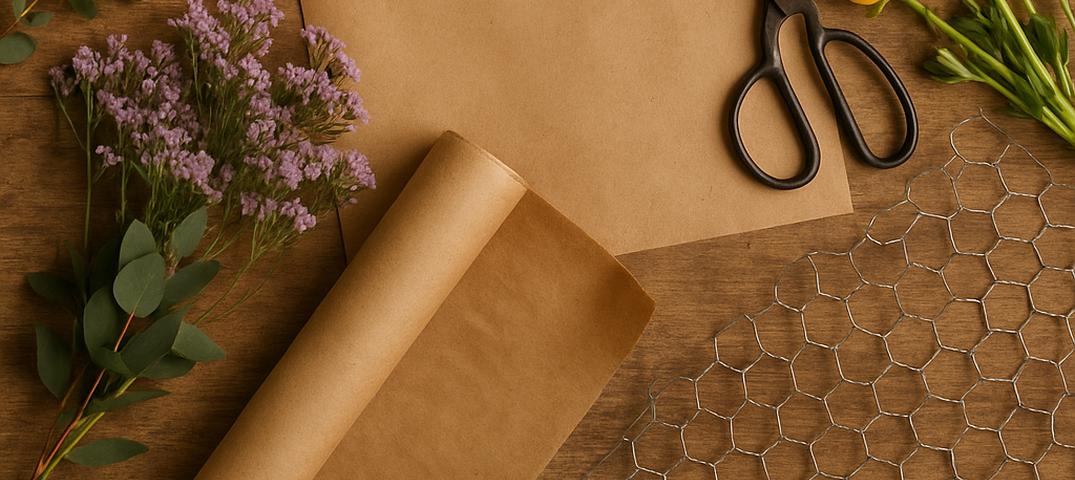
Chicken wire provides a versatile and inexpensive means for building floral installation mechanics:
5. Eco-Friendly Floral Tools and Accessories
The tools florists use can make a big difference. Products like Natural Bio Wire, Floral Wool®, and Self-Sticking Twine offer sustainable alternatives to traditional materials. Koch & Co®’s Clear Plastic Pin Frogs, equipped with suction cups, provide a reusable and eco-friendly way to secure floral designs on smooth surfaces.
Meanwhile, new packaging options, such as wax-lined water bags and soy-ink printed handle carriers, protect delicate blooms while being 100% recyclable. These changes not only align with sustainable practices but also resonate with eco-conscious customers, building brand trust.
Check out our biodegradable range of Get It Fresh™ flower hydration wraps for a convenient and eco-conscious way to keep bouquets fresh:
6. Sustainability: A Key to Future Success
Sustainability isn’t just a moral imperative; it’s a business opportunity. Millennials and Gen Z consumers increasingly prioritise environmentally responsible products. Studies show that nearly 73% of Gen Z are willing to pay more for sustainable goods, and their collective purchasing power is set to surpass baby boomers by 2030.
Florists can benefit by advertising their sustainable practices, sourcing locally grown flowers, and collaborating with eco-conscious venues. These efforts not only attract customers but also secure long-term profitability.
Sustainable floristry isn’t just a movement—it’s a mindful way to celebrate nature through design. By choosing eco-friendly materials and practices, florists can ensure they remain relevant and thriving in an evolving market.. At Koch & Co®, we’re proud to offer products that support this vision, so you can design with creativity and care for the planet. For more information on sustainable floristry, read our blogs Simple Steps Toward a Sustainable Future for Australian Florists and A Guide to Sustainable Packaging Trends & Solutions for Every Occasion.